miggiddymatt.com › Gardening
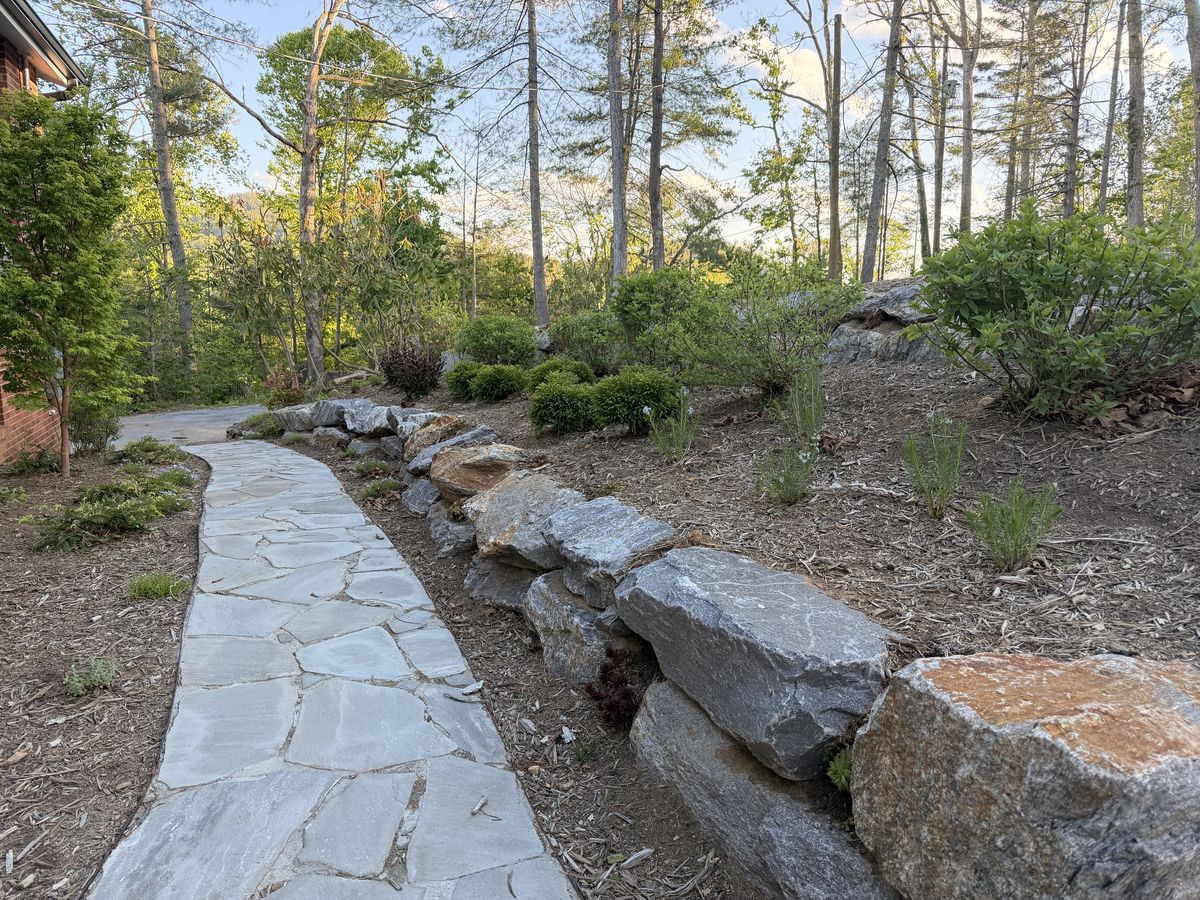
Building out the rock garden beds meant learning which plants belong here and which ones just look good on the label at the nursery. A field guide to what's working — and what the deer ate anyway.
When we started building out the rock garden — the flagstone path, the granite retaining walls, the beds carved into the slope — I made the mistake most new mountain gardeners make: I went to the nursery without a plan and bought whatever looked beautiful. Some of it survived. Most of what survived is native.
Western North Carolina sits in zone 7a, which sounds straightforward until you realize that elevation, slope aspect, and shade can each shift your microclimate by a full zone. What thrives on the sunny south-facing side of the wall dies in the moist shade twenty feet away. After a few seasons of trial and error, here's what's actually earning its place in our beds.
Eastern bluestar (Amsonia tabernaemontana) — This is the one I keep coming back to. Soft powder-blue star-shaped flowers in late spring, feathery willow-like foliage through summer, and then brilliant golden-yellow fall color that rivals anything in the garden. It's fully drought-tolerant once established, deer resistant, and it fills in beautifully without becoming aggressive. The photo from this spring shows it just coming into bloom alongside the rock wall — that blue against the gray granite is the most satisfying combination in the whole yard.
Sempervivum (hens and chicks) — Strictly speaking, sempervivums are European, not native to WNC, but they've earned honorary membership by thriving in the one place nothing else will: the gaps between the granite boulders where there's essentially no soil. They've colonized a whole section of the rock wall and I've done nothing for them. The dark burgundy variety overwinters beautifully and the rosette structure looks good even in February.
Black and blue salvia (Salvia guaranitica) — The dark-leafed, black-stemmed salvia in the upper bed is technically South American, but it performs like a native here — returning reliably each spring, growing to four feet, and blooming deep blue-violet from late summer until hard frost. The hummingbirds are unreasonably enthusiastic about it. It seeds around gently, so I let it naturalize where it wants.
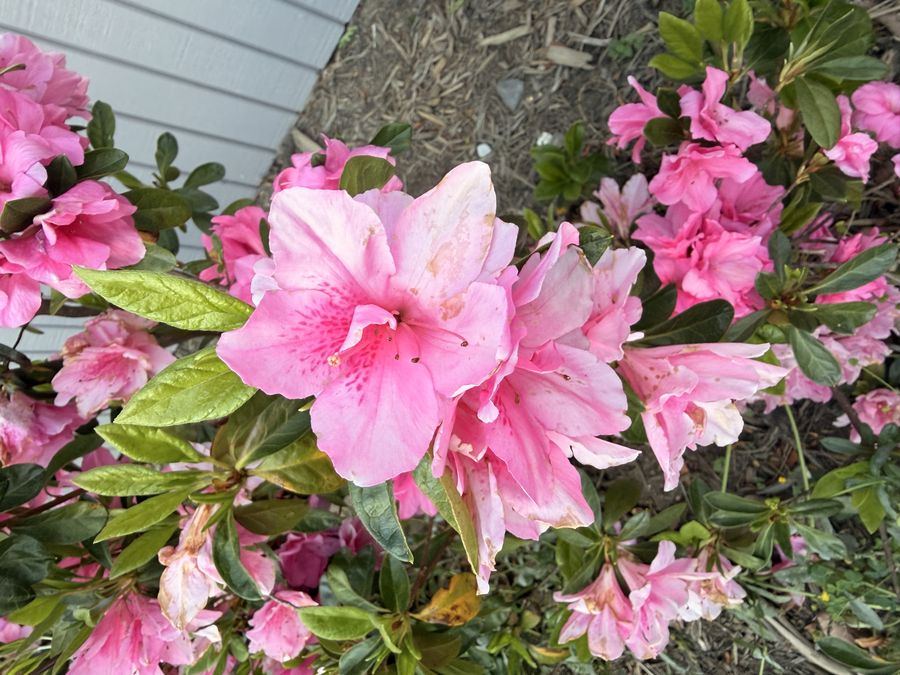
Native azaleas — The pink azaleas along the house foundation are not native — they're the typical hybrid garden variety — but if you're in WNC and want to go native, flame azalea (Rhododendron calendulaceum) is the one to find. Orange, yellow, and red flowers, no fragrance, and blooms two weeks later than the hybrids when everything else has faded. I'm planning to add some to the upper beds this fall.
What the deer ate — Hostas, echinacea, and both times I tried to establish trillium. The rock garden's slope gives some protection but anything in the open is fair game after midnight. The lesson I keep relearning is that deer-resistant isn't the same as deer-proof, and that the most reliable strategy is to plant so much of what they avoid that the losses don't matter.
The plan this year is to add more amsonia, some native columbine in the shadier sections, and a few clumps of Carolina lupine (Thermopsis villosa) on the upper slope where it can get the full sun it wants. The yard project is very much ongoing.
Zone 7a gardening in the western NC mountains is humbling. The deer think my raised beds are a buffet, the late frosts don't care about my timeline, and I am once again growing more zucchini than any household needs.
The flagstone path through the front beds is finally finished and it's changed how I relate to the whole garden. Having a defined route through it means I actually walk it every morning instead of just glancing from the deck.
This spring I went a little overboard. The azaleas along the house are doing exactly what azaleas do in April — absolutely exploding with pink. The sempervivums tucked into the rock wall are spreading nicely into the gaps. The eastern bluestar (amsonia) I planted last fall came back strong — that soft blue against the gray granite is something.
The vegetable situation is more complicated. I put in tomatoes a week before the last frost advisory because I was impatient. Covered them with frost cloth and got lucky. The zucchini is already doing what zucchini does. Neighbors beware.
The deer pressure this year has been significant. I've given up on hostas in any unprotected area. The raised beds are doing fine but everything at ground level is fair game after dark.