
miggiddymatt.com › Grilling & BBQ
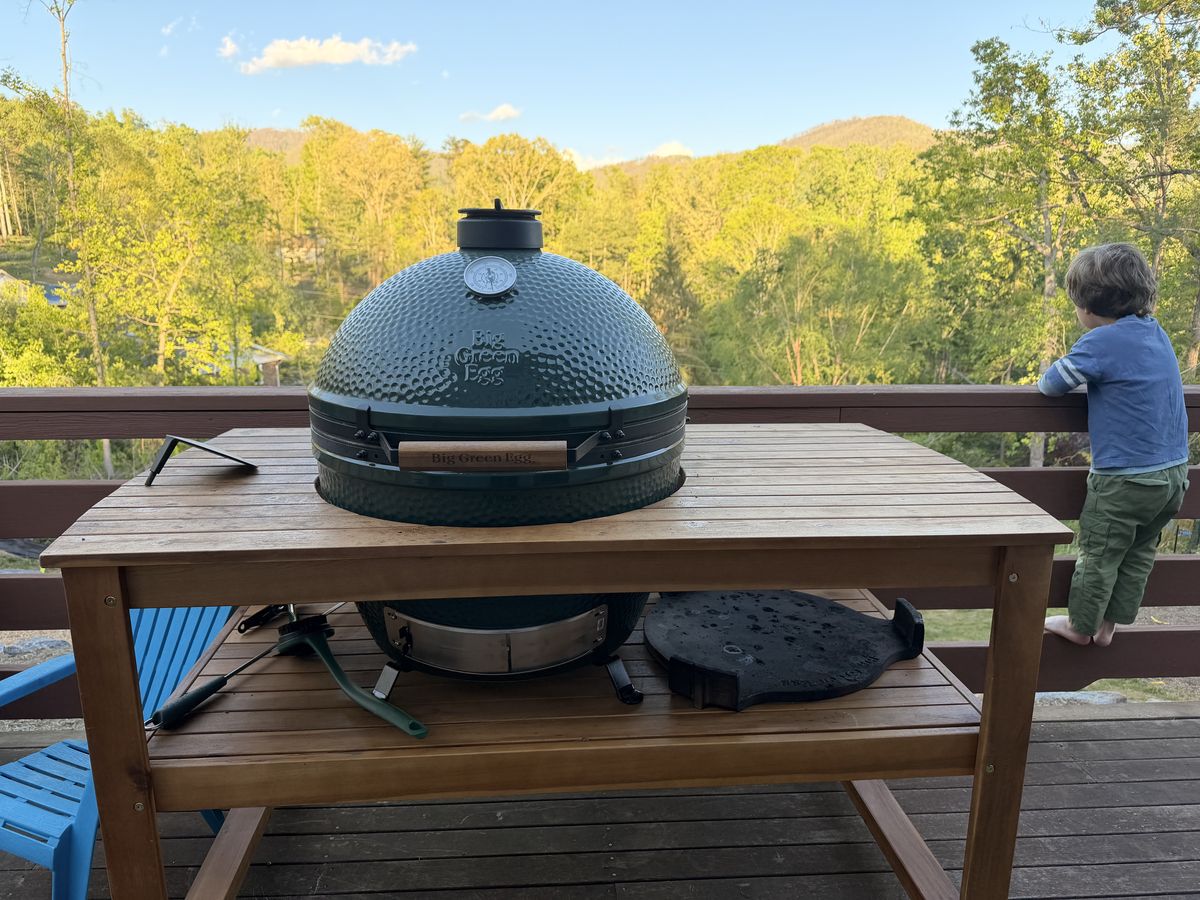
A spatchcocked bird at 400°F on the Big Green Egg with indirect heat. Crispy skin, juicy meat all the way through, done in under an hour. Why doesn't everyone cook chicken this way?
I've been roasting chickens for years — in a cast iron skillet, in a Dutch oven, on a rack in the oven — and they've always been fine. Good, even. But not remarkable. Then I started doing them on the Big Green Egg and now I can't go back.
The method is spatchcock (also called butterfly), which means removing the backbone so the bird lays flat. It sounds more dramatic than it is — a pair of kitchen shears, two cuts along either side of the spine, and you're done. Press the bird flat and it's ready to go. The payoff is that the breast and thigh finish cooking at the same time, which is the fundamental challenge of roasting a whole chicken.
The setup: Get the Egg dialed in at 400°F running indirect — convEGGtor plate in, grill grate on top. I use a mix of lump charcoal and a small chunk of peach or cherry wood for a light smoke that doesn't overpower the chicken. This isn't a long smoke; it's a high-heat roast with a little wood flavor in the background.
The prep: Pat the bird dry — this is the step most people skip and it's the one that matters most for crispy skin. Dry skin browns; wet skin steams. I use either a Meat Church Holy Gospel rub or just go simple: salt, pepper, garlic powder, and whatever fresh herbs are growing. Get some compound butter under the skin over the breast if you want to go the extra mile — softened butter with thyme, lemon zest, and garlic pressed under the skin before cooking.
The cook: Spatchcocked bird goes on the grate skin-side up, no flipping. At 400°F indirect, a standard 4-pound chicken takes 45 to 55 minutes. You're looking for 165°F in the thickest part of the thigh, but the skin will tell you most of what you need to know — when it's deep golden brown and pulling tight, you're close.
The rest: Ten minutes under loose foil. This isn't optional. The juices redistribute and the carry-over heat finishes the job.
The result is a chicken with skin that shatters when you cut into it, meat that's genuinely juicy through to the bone, and a faint smoke that makes you feel like you actually cooked something. I do one of these about every two weeks now. It's become the house standard.
Six hours, three phases, one rack of baby backs that falls off the bone. I followed the Meat Church approach as closely as I could on the Big Green Egg. Here's how it went.
The 3-2-1 method is named for its timing: three hours of smoke, two hours wrapped in foil, one hour unwrapped to set the bark and sauce. It's the most forgiving rib method I know of — the foil phase does the heavy lifting on tenderness and there's enough buffer in the timing that a half-hour either way doesn't ruin anything. Meat Church out of Waxahachie, Texas has become my go-to reference for this cook.
The prep — the night before: Pull the membrane off the bone side of the rack. This step is non-negotiable — that thin silver membrane blocks smoke penetration and you'll never get it off cleanly once it's cooked. Grab it with a paper towel at one end and it peels right off. Rub the bone side with Meat Church Honey Hog Hot, then flip and hit the meat side with a second coat. Wrap in plastic and refrigerate overnight. The rub sets up into a tacky crust that holds smoke and creates the foundation of the bark.
Phase 1 — three hours of smoke: Get the Egg running at 225°F indirect with the convEGGtor in. I used a combination of lump charcoal and apple wood chunks — fruit wood is the right call for pork; hickory or oak can be a little heavy on ribs over a long cook. Ribs go on bone-side down, no touching for three hours. Spritz with apple juice every 45 minutes if you want to keep moisture on the surface and encourage bark development. By the end of hour three you're looking for a deep mahogany color and the beginning of a bark that holds its shape when you press it.
Phase 2 — two hours in foil: This is the Meat Church signature move. Lay out two long sheets of heavy foil and create a bed of brown sugar and butter — a good handful of brown sugar, four or five pats of butter, and a bead of Texas Pepper Jelly (apple and brown sugar flavor) if you can find it. Place the ribs meat-side down on that sweet mixture, fold up three sides of the foil, pour in a quarter cup of apple juice as a braising liquid, then seal the last side. Back on the Egg at 225°F for two hours. The target is 203-205°F internal and the meat pulling back from the bone ends. The foil environment steams the ribs and drives the collagen breakdown that makes them pull-tender.
Phase 3 — one hour unwrapped: Pull the ribs from the foil carefully — there's a lot of hot liquid in there. Sauce both sides with your BBQ sauce of choice; Meat Church uses a 3:1 mix of their favorite BBQ sauce and Texas Pepper Jelly Rib Candy. Back on the grate at 225°F for the final hour, letting the sauce tighten and caramelize into a glaze. This is the phase where the bark firms back up and everything comes together.
After a ten-minute rest the ribs should have a clean pull from the bone — not fall-off, which actually indicates they went too far, but a firm gentle tug that releases clean. These were the best ribs I've made. The Meat Church rubs are worth seeking out; the Honey Hog Hot has exactly the right balance of sweet heat that plays beautifully against the apple and brown sugar in the wrap phase.
Full credit to Meat Church's baby back rib recipe for the core method — I adapted it for the Egg but the bones of the technique are theirs.
Pork shoulder at 225° for fourteen hours while the neighborhood slowly loses its mind. Notes on fire management, bark formation, and why I keep coming back to lump charcoal over briquettes.
There's a particular kind of patience required for low-and-slow barbecue that I didn't know I had until I got the Big Green Egg. It's not passive patience — you're checking temps, adjusting vents, managing the fire — but it forces you to slow down in a way that most weekend activities don't.
The cook started at 6am. Eight-pound bone-in pork shoulder, dry-rubbed the night before with brown sugar, smoked paprika, garlic powder, black pepper, and a healthy dose of kosher salt. The Egg was dialed in at 225°F running lump charcoal with a few chunks of apple wood tucked in for smoke.
The stall hit around 165°F internal — that long plateau where the evaporative cooling of the meat matches the heat input and the temperature just... stops moving. This is where the impatient cook reaches for the foil. I waited it out. Two hours of nothing, then a slow climb to 203°F where the bone slides clean out and the whole thing falls apart in your hands.
Rested for an hour under foil and a couple of towels in a cooler. Pulled it apart and served it plain — no sauce needed when the bark is right. The mountains in the background and a cold beer in hand made it a perfect Sunday.